The Beginner's Guide to the Battle Ropes: 5 Essential Exercises for Strength and Conditioning
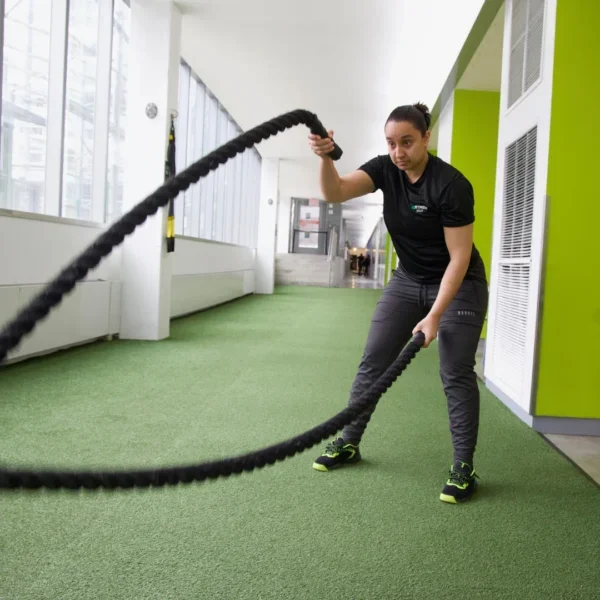
There isn’t a lot of gym equipment that’s recommended for almost every skill level and builds strength and endurance in one. So, when you find one, it’s important to add it to your arsenal!
We’re of course talking about the battle ropes, a tool we use at Asphalt Green Fitness every day. Battle ropes are an effective training tool for strength and conditioning. But with no machinery or instructions, trying the battle ropes isn’t straightforward for those just starting out.
Watching athletes sweat through a battle ropes workout can leave beginners intimidated, but fear not. By adjusting your speed, stance, and movement range, you can modify the exercises to your fitness level and goals and use the battle ropes to reach the next step in your journey.
Read on to add this essential equipment to your routine and become “battle ready.”
What Are Battle Ropes?
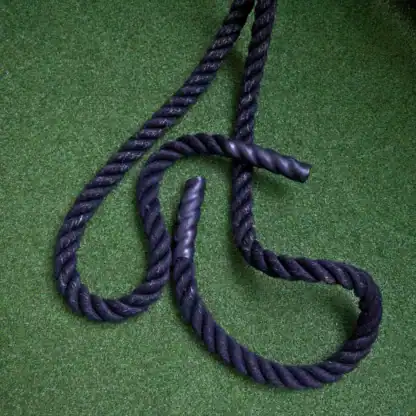
Battle ropes are long, heavy ropes that are anchored to a fixed point such as a wall mount, rack, or sled. During a workout, you hold one end of the rope in each hand and create different movements depending on what muscle groups you’re trying to engage.
What Are the Benefits of Battle Ropes?
Battle ropes create continuous resistance that builds both strength and endurance. Since they’re able to engage multiple muscle groups simultaneously, battle rope workouts are commonly used in high-intensity interval training (HIIT) workouts.
Battle rope exercises target several major muscle groups, including:
- Shoulders
- Arms (biceps and triceps)
- Upper back and lats
- Core muscles
- Legs and glutes
Unlike running or jumping exercises, battle ropes provide lower-impact conditioning, allowing you to boost your stamina without placing excessive stress on your joints. Lastly, battle rope exercises are highly scalable: Advanced athletes can put their work to the test with additional speed, power, or repetitions for each movement.
How to Set Up Battle Ropes
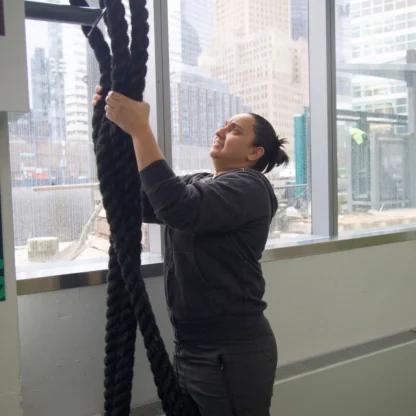
Now, it’s time to get moving. Our AG Fitness trainers recommend you learn these five popular battle rope variations to add to your routine.
Before starting a battle rope workout, make sure the rope is securely anchored to a stable object.
Once you’re ready, follow these steps:
- Stand facing the rope’s anchor point.
- Hold one rope in each hand with a firm grip.
- Position your feet shoulder-width apart.
- Bend your knees slightly and engage your core.
- Maintain an athletic stance throughout each exercise.
1. Alternating Battle Ropes Waves
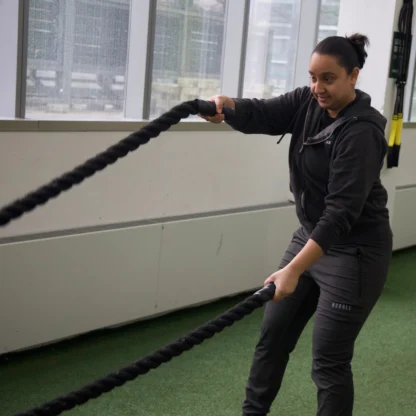
Targets: shoulders, arms, and core.
Alternating waves are the most common battle rope exercise and a great starting point for beginners.
Begin in an athletic stance while holding one rope in each hand. Move your arms up and down in opposite directions to create alternating waves traveling down the rope. Focus on maintaining a steady rhythm and generating consistent waves rather than simply moving your arms quickly.
2. Double Battle Ropes Waves
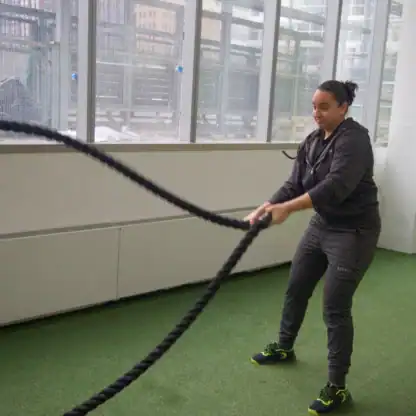
Targets: shoulders, upper back, and core.
Double waves increase the challenge by moving both arms simultaneously.
Stand in a stable stance with your knees slightly bent. Lift both arms together and drive them downward to create larger waves that travel toward the anchor point. Maintain control of your torso and keep your core engaged throughout the movement.
3. Battle Ropes Slams
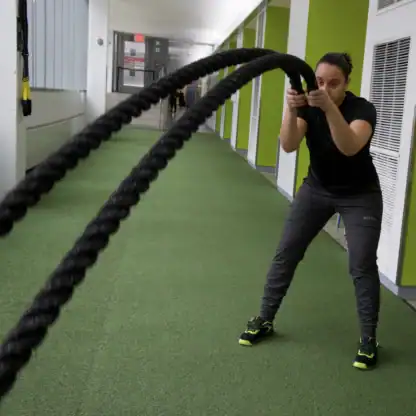
Targets: Shoulders, lats, core, and legs.
Battle rope slams are an explosive movement that increases power and workout intensity.
Stand tall and start by raising both ropes overhead. Then slam the ropes down forcefully toward the ground while hinging slightly at the hips. Immediately lift the ropes again and repeat the movement.
4. Battle Ropes Russian twists
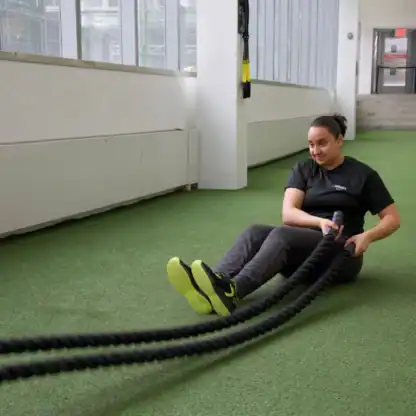
Targets: core, obliques, and shoulders.
Battle rope Russian twists add a rotational element to rope training, helping strengthen the core while improving coordination and stability.
Sit on the floor facing the rope anchor with your knees bent and lean back slightly to engage your core. Hold both ends of the rope together and rotate your torso from side to side, guiding the ropes across your body toward each hip. Maintain a lifted chest and controlled movement as you twist from one side to the other.
5. Battle Ropes Circles
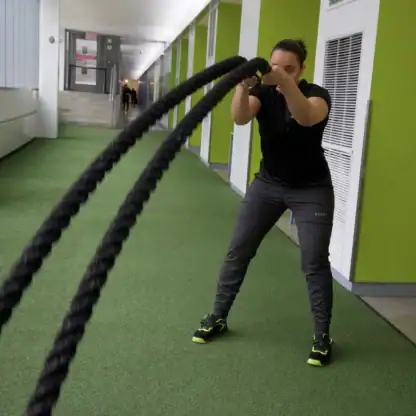
Targets: shoulders, traps, and upper back.
Battle rope circles challenge shoulder endurance and coordination.
Stand with your feet shoulder-width apart while holding one rope in each hand. Move your arms in circular motions to create loops in the ropes. You can perform the circles inward or outward depending on your preference.
follow This AG Fitness Workout on instagram
Frequently Asked Questions About Battle Rope Exercises
Are battle ropes good for beginners?
Yes. Battle ropes are beginner-friendly because you can easily control the intensity of each exercise. Beginners can start with shorter intervals and slower movements before progressing to faster, more explosive workouts.
What muscles do battle ropes work?
Battle rope exercises primarily work the shoulders, arms, upper back, core, and legs.
How long should a battle rope workout be?
Most battle rope workouts last eight to ten minutes and use interval-style training. For example, 20–40 seconds of work followed by a short rest period.
Are battle ropes good for cardio?
Yes. Battle ropes elevate your heart rate quickly, making them an effective form of high-intensity cardio and conditioning training.