Beginner's Guide to Training for Longevity: 4 Moves to Build Lifelong Strength
Training for longevity isn’t about chasing a personal record or a perfect physique. It’s about building the strength, stability, and confidence to keep doing the things you love, playing with your kids, climbing stairs, traveling, staying active, for decades to come. At Asphalt Green, we believe the best workout isn’t the one that wears you out today; it’s the one that keeps you moving well for life.
These four beginner-friendly exercises target the foundational movement patterns, hinging, pulling, squatting, and carrying, that support long-term strength, balance, and independence at any age.
What Is Longevity Training, and Why Does It Matter?
Longevity training is a style of strength training focused on building functional, durable strength that supports everyday movement and reduces injury risk over time. Rather than isolating single muscles, it emphasizes full-body patterns like hinging, pulling, squatting, and carrying that mirror how we actually move through life.
Longevity training matters because strength and muscle mass naturally decline with age if left unaddressed, a process that can affect balance, bone density, and independence. Building foundational strength now, no matter your starting point, helps protect your mobility and quality of life well into the future.
1. Trap Bar Deadlift (For Hip Hinge Strength)
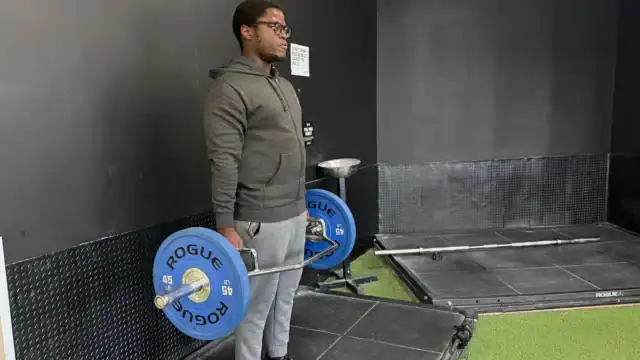
What is a trap bar deadlift?
The trap bar deadlift is a lower-body exercise performed by lifting a hexagonal barbell from the floor while standing inside it. Because the handles sit at your sides rather than in front of you, it’s one of the most beginner-friendly ways to learn the hip hinge, a foundational movement pattern for lifting safely.
How do you perform a trap bar deadlift?
- Stand inside the trap bar with feet hip-to-shoulder-width apart
- Hinge at your hips and bend your knees to grip the handles, keeping your chest up and back flat
- Brace your core and drive through your feet to stand up, lifting the bar close to your body
- Squeeze your glutes at the top without leaning back
- Lower the bar with control by hinging your hips back first, then repeat
What muscles does the trap bar deadlift work?
- Glutes
- Hamstrings
- Lower back (erector spinae)
- Core
- Grip and forearms
Why is the trap bar deadlift effective?
The trap bar deadlift teaches your body to lift with your hips and legs instead of your lower back, a pattern you rely on every time you pick something up off the ground. Building strength in this movement helps protect your spine and supports safe, confident lifting for life.
2. Seated Cable Row or Lat Pulldown (For Upper Back and Posture)
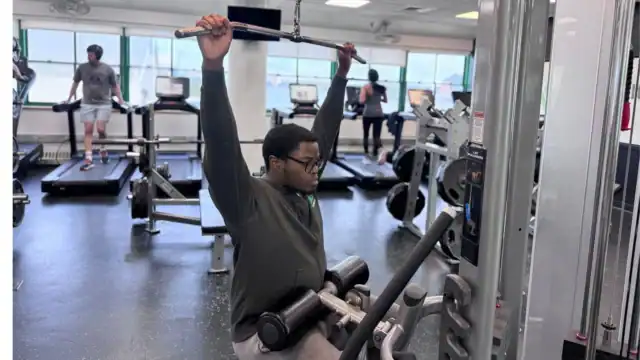
What are the seated cable row and lat pulldown?
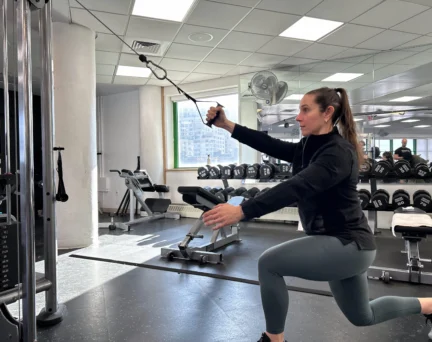
The seated cable row and lat pulldown are two cable-based exercises that strengthen the muscles of the upper back by pulling weight toward your body. Both are effective, beginner-friendly ways to build pulling strength and support better posture.
How do you perform a seated cable row?
- Sit at the cable row station with your feet braced against the platform and knees slightly bent
- Grip the handle with both hands and sit up tall, shoulders relaxed
- Pull the handle toward your torso, squeezing your shoulder blades together
- Slowly extend your arms back to the starting position with control, then repeat
How do you perform a lat pulldown?
- Sit at the lat pulldown machine and secure your knees under the pad
- Grip the bar slightly wider than shoulder-width
- Pull the bar down toward your upper chest, leading with your elbows
- Slowly return the bar to the starting position with control, then repeat
What muscles do these exercises work?
- Latissimus dorsi (back)
- Rhomboids and mid-trapezius (between the shoulder blades)
- Biceps
- Rear deltoids
Why are these exercises effective?
Much of daily life, from sitting at a desk to using a phone, pulls the shoulders forward. Rowing and pulldown movements strengthen the muscles that counteract that posture, supporting a stronger, more upright upper back over time.
3. Goblet Box Squat
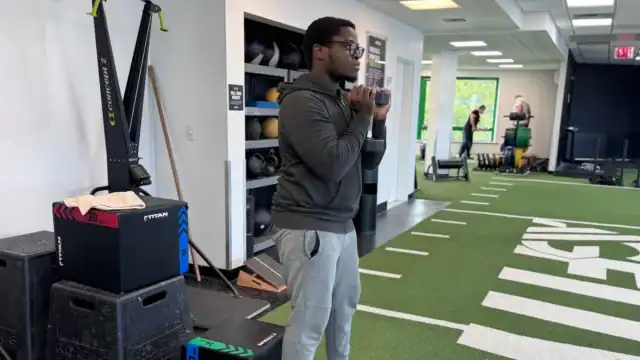
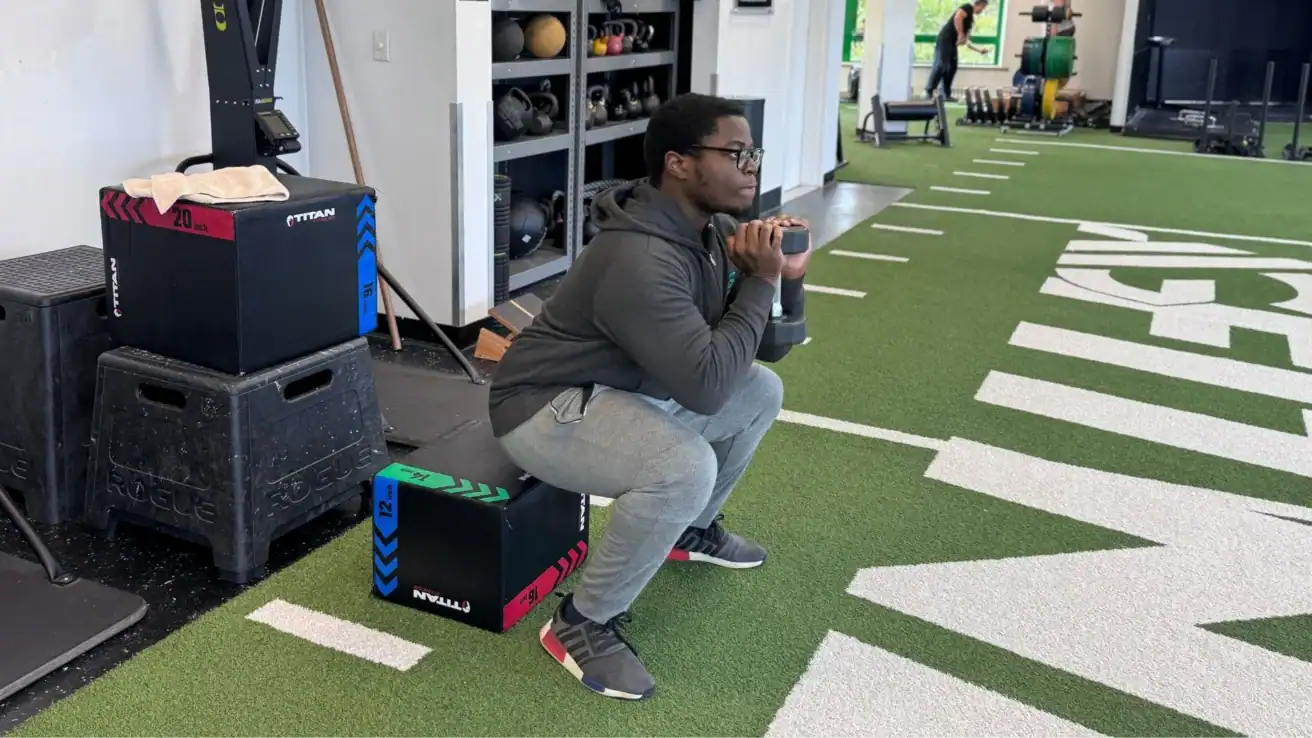
What is a goblet box squat?
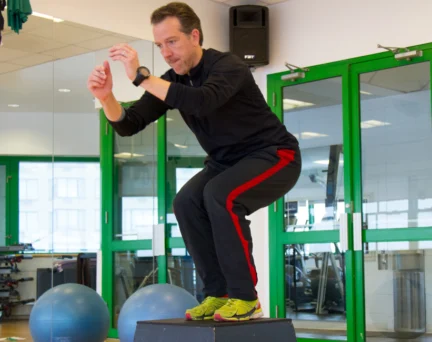
The goblet box squat is a beginner-friendly squat variation performed while holding a single weight at your chest and sitting back onto a box or bench. It builds lower-body strength while teaching a safe, controlled squat pattern.
How do you perform a goblet box squat?
- Hold a dumbbell or kettlebell against your chest with both hands
- Stand in front of a box or bench with feet shoulder-width apart
- Keeping your chest up, sit back and down until you lightly touch the box
- Press through your feet to stand back up, keeping your knees tracking over your toes
- Repeat with control
What muscles does the goblet box squat work?
- Quadriceps
- Glutes
- Core
- Upper back, as a stabilizer holding the weight
Why is the goblet box squat effective?
Squatting is a movement you use every time you sit down, stand up, or pick something up from a low position. The box provides a consistent depth marker and a safety check, making this an accessible way to build squat strength and confidence, especially for beginners.
4. Farmer Carry (For Grip Strength and Full-Body Stability)
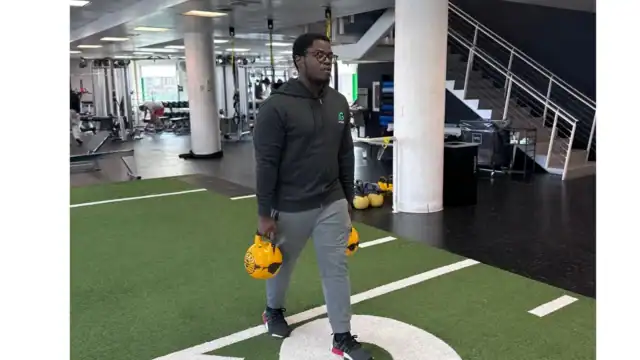
What is a farmer carry?
The farmer carry is a simple but powerful exercise that involves walking a set distance while holding a heavy weight in each hand. It builds grip strength, core stability, and overall full-body coordination.
How do you perform a farmer carry?
- Stand between two dumbbells or kettlebells, feet hip-width apart
- Hinge at your hips and knees to pick up a weight in each hand
- Stand up tall with shoulders back and core braced
- Walk forward with controlled, even steps for a set distance or time
- Set the weights down with control, resetting your hips and knees rather than your back
What muscles does the farmer carry work?
- Grip and forearms
- Core
- Traps and shoulders
- Glutes and legs, as stabilizers
Why is the farmer carry effective?
Grip strength is one of the most consistent markers researchers use to track healthy aging, and the farmer carry is one of the simplest ways to build it. Because it also demands total-body stability, this single exercise reinforces good posture, core control, and functional strength all at once.
Building Longevity Into Your Training
Practicing these four foundational patterns, hinging, pulling, squatting, and carrying, a few times a week can help you start building the strength and stability to stay active for years to come.
Asphalt Green longevity-focused training plan built around your specific goals? Asphalt Green’s Personal Training program pairs you with an expert trainer who can help you move, recover, and train smarter. Get started today.