The Beginner’s Guide to Deep Water Exercise: 4 Essential Exercises for Strength and Cardio
July 1, 2026
There’s a reason deep water exercise has become one of the most popular low-impact workouts around. By taking your workout off the ground and into the pool, you can build strength, improve cardiovascular fitness, and protect your joints — all at the same time.
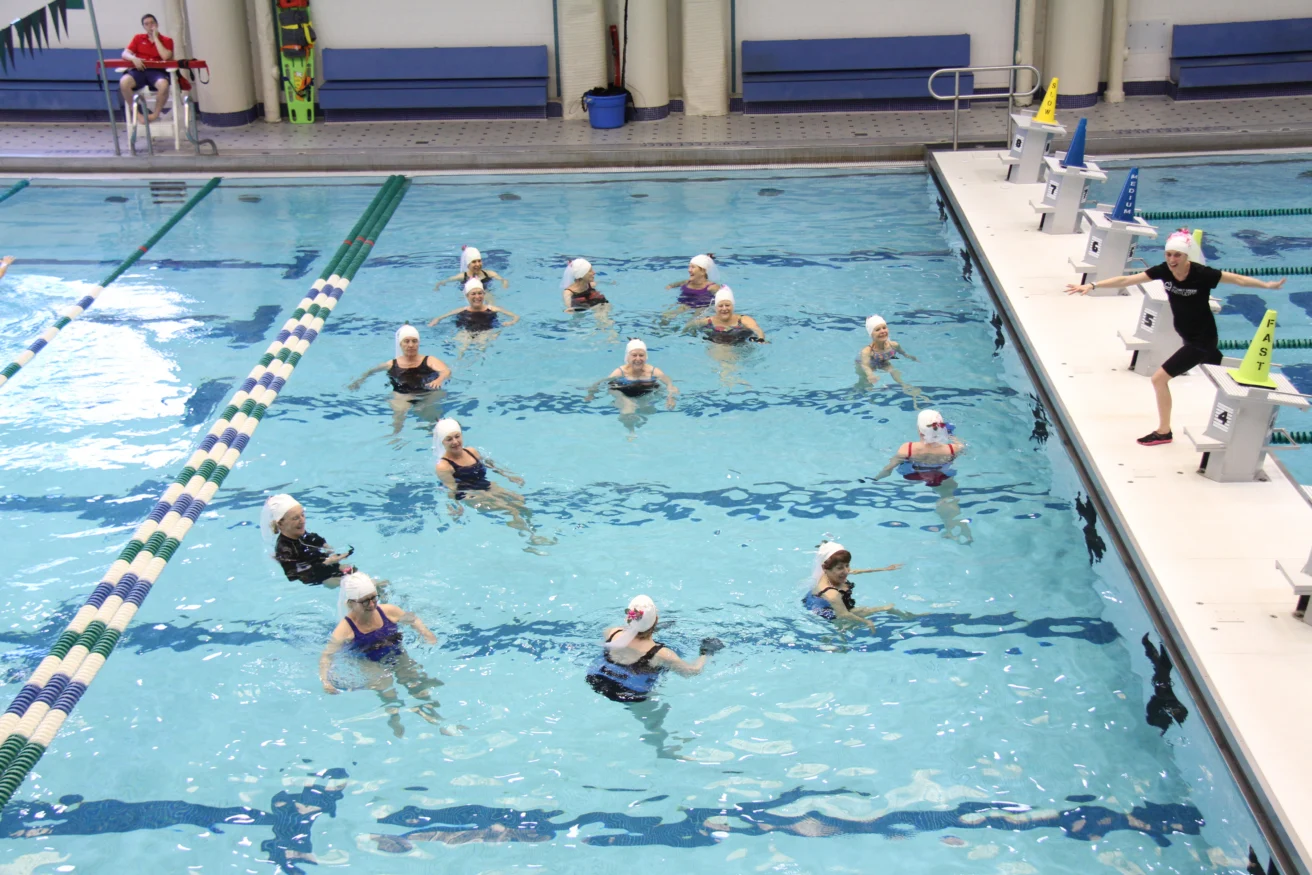
At Asphalt Green, deep water exercise is a cornerstone of our Water Exercise classes, welcoming participants of all fitness levels and abilities. Whether you’re returning from an injury, looking for a new challenge, or simply ready to mix up your routine, deep water exercise is a refreshing place to start.
Read on to learn four essential deep water exercises to add to your workout.
“In the water, the impact of arthritis and joint pain is minimized because there is less weight bearing on your joints. The buoyancy of the water allows range of motion in exercise, so that you can participate and receive the benefits of the exercise on your cardiovascular and muscular systems.”
– Kat Knight, Water Exercise Instructor
What Is Deep Water Exercise?
Deep water exercise is a form of aquatic fitness performed in the deep end of a pool, where your feet don’t touch the bottom. A flotation belt keeps you suspended upright, so you can focus entirely on your movement. Without the ground beneath you, your body relies on water resistance and core engagement to stay stable — making every exercise more effective than it might look.
What Are the Benefits of Deep Water Exercise?
Deep water exercise delivers a full-body workout with minimal impact on your joints. Because water provides resistance in every direction, your muscles work harder with every movement — without the strain of high-impact exercise.
Deep water exercises target several major muscle groups, including:
Core and stabilizing muscles
Legs and glutes
Shoulders and arms
Upper and lower back
Because you’re suspended in water rather than supported by the ground, your core is constantly engaged throughout every exercise. This makes deep water training especially effective for building functional stability and endurance. It’s also an excellent option for individuals managing arthritis, recovering from injury, or looking for a sustainable long-term fitness routine.
How to Get Started in Deep Water Exercise
Before you begin, secure your flotation belt snugly around your waist. Enter the deep end using the pool ladder and allow the belt to bring you to an upright, suspended position. Your body should be vertical with your head comfortably above water.
Once you’re ready, follow these steps:
Keep your core engaged throughout every exercise
Move with control — water resistance does the work
Maintain an upright posture; avoid leaning too far forward or back
Breathe steadily and find a consistent rhythm before increasing intensity
1. Chest Fly
Targets: pectoralis, latissimus dorsi, and posterior deltoid.
The chest fly is a foundational deep water exercise that uses the resis
tance of the water to strengthen the chest and back while keeping your body stable in a suspended position.
From a vertical position, extend your arms out to your sides. Sweep them forward through the water, then push them back to the sides of your ribs. As you move through each repetition, work against the current you create rather than letting the water carry your arms. Spread your fingers wide and use your palms like a paddle to maximize resistance with every rep.
2. XC Ski
Targets: quadriceps, hip flexors, gluteus maximus, hamstrings, triceps, and biceps.
The XC Ski mimics the motion of cross-country skiing and is one of the most effective deep water exercises for full-body cardiovascular conditioning.
From your suspended position, move your legs into a front-and-back stride, alternating each leg as you go. Coordinate your arms with your leg motion, driving them forward and backward in opposition — opposite arm to opposite leg. As you move, push the water forward and backward with each stride, working against the current you create to increase resistance throughout the exercise.
3. Hip Abduction/Adduction with Arms
Targets: trapezius, supraspinatus, deltoids, gluteus medius, tensor fasciae latae, and hip adductors.
This exercise combines lateral leg movement with coordinated arm work, challenging your stability and targeting the hips, glutes, and shoulders simultaneously.
Open your legs apart, then pull them back together in a controlled lateral motion. As your legs move, bring your arms down to your sides and work against the current to raise them just below the surface of the water — then push them back down to begin the next repetition. Focus on moving with intention in both directions, using the water’s resistance on the way up and the way down.
4. Abdominal Tucks
Targets: abdominals, obliques, and rectus femoris.
Abdominal tucks take full advantage of the deep water environment, allowing you to engage your core in ways that simply aren’t possible on land.
From your suspended position, lift your bent legs up away from the pool floor while simultaneously supporting your back. You can alternate one leg at a time for a more controlled movement, or bring both legs up and down together for a greater challenge. Either way, focus on initiating the movement from your core rather than letting your hips do the work.
Frequently Asked Questions About Deep Water Exercise
Do I need to know how to swim to do deep water exercise?
Not necessarily. A flotation belt keeps you suspended and upright throughout the workout, so swimming ability is not required. However, all participants should be comfortable in the water. If you have any concerns, speak with an instructor before your first class.
Is deep water exercise good for beginners?
Yes. Deep water exercise is highly adaptable. Beginners can start with slower, controlled movements and smaller ranges of motion before gradually increasing intensity. Because the water supports your body weight, it’s a low-risk environment to build fitness from the ground up.
What muscles does deep water exercise work?
Deep water exercise engages the full body, with particular emphasis on the core, legs, glutes, shoulders, and back. Because your core is constantly working to keep you upright and stable, it receives a significant workout in every session.
Is deep water exercise good for people with joint pain or injuries?
Deep water exercise is one of the most joint-friendly workouts available. The buoyancy of the water reduces stress on the hips, knees, and spine while still providing meaningful resistance for strength and cardiovascular training. Always consult your physician before beginning a new exercise program, especially if you are recovering from an injury.
How long should a deep water exercise session be?
Most deep water exercise classes run between 45 and 60 minutes. If you’re just getting started, focus on form and building comfort in the water before pushing your pace or intensity.
Try Water Exercise at Asphalt Green
Now that you’ve read this Asphalt Green Fitness Beginner’s Guide, you’re ready to get in the water! Asphalt Green offers weekly Water Exercise classes for all ages and skill levels. If you’re looking for a low-impact form of exercise or want to compliment your existing routine, dive in by booking your spot below!