Asphalt Green Soccer Club’s FIFA 2026 World Cup Viewer’s Guide
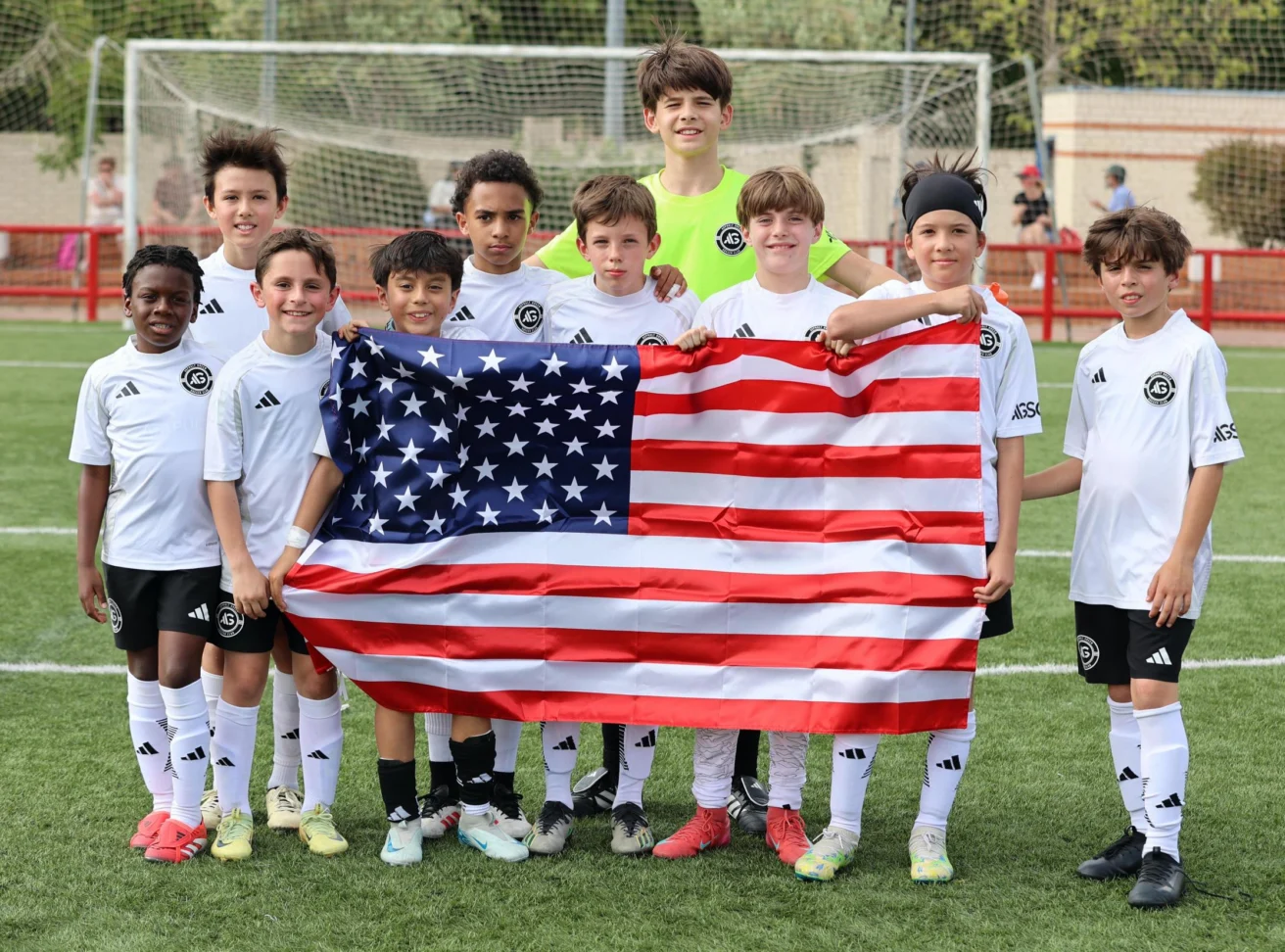
The World Cup may be played every four years, but seeing one in your own backyard? That’s once-in-a-lifetime.
At Asphalt Green Soccer Club, we’re already feeling the excitement. Our athletes are playing with extra inspiration. Parents are making plans to watch every match, and our coaches can’t stop debating tournament predictions.
We know that this year’s World Cup is going to be special, and we want to celebrate the game we love with the entire NYC community. Whether you’ve been counting down the days like us or you’re brand new to the sport, we put together this guide to help you make the most of a tournament we’ll never forget.
Read on to learn the key dates, rules, and lingo so you can celebrate with us all summer long.
What is the 2026 FIFA World Cup?
The 2026 FIFA World Cup runs June 11 – July 19 and is the largest edition in the tournament’s history.
- 48 teams — up from 32 in previous tournaments
- 104 total matches played over 39 days
- 16 host cities across the United States, Canada, and Mexico
- The Final takes place July 19 at MetLife Stadium in East Rutherford, NJ
The expanded field means there are more nations represented than ever before, including many debuts from countries including Cape Verde, Curaçao, Jordan, and Uzbekistan.
How Does the FIFA World Cup Work?
The 48 qualified nations are divided into 12 groups of four teams. Each team plays three group stage matches. Advancement works as follows:
- The top two teams from each group advance automatically
- The eight best third-place finishers across all groups also advance
- This creates a new Round of 32 — a knockout stage introduced for the first time in World Cup history
From there, the tournament is pure single elimination: Round of 32 → Round of 16 → Quarterfinals → Semifinals → Final. Every match from that point forward is win or go home.
When Are the Key Dates of the FIFA World Cup?
Group Stage: June 11 – June 27
Round of 32: June 28 – July 3
Round of 16: July 4 – July 7
Quarterfinals: July 11 – July 12
Semifinals: July 14 – July 15
Third Place Match: July 18
Final: July 19 – MetLife Stadium, NJ
The tournament opens June 11 with Mexico vs. South Africa at Estadio Azteca in Mexico City
What’s New? Rule Changes for 2026
Several new rule adjustments are in effect for this year’s tournament that could have a substantial impact.
1. Time Limits on Stoppages
Throw-ins, goal kicks, substitutions, and medical treatments are now subject to enforced time limits. Soccer operates on a continuous running clock, which has historically made deliberate time-wasting a viable — if frustrating — tactic for teams protecting a lead. These changes are designed to address that directly and keep the game moving at the pace it deserves.
2. Goalkeeper Possession Limits
Goalkeepers are no longer permitted to hold the ball for extended periods. This complements the broader effort to reduce stoppages and maintain tempo throughout matches.
3. Expanded VAR
Video Assistant Referee review has an expanded role in 2026. VAR is used to correct clear errors made by on-field officials — missed fouls, offside calls, penalty decisions. It adds a layer of scrutiny that can occasionally slow the game, but the net result is more accurate officiating and greater fairness for both sides.
4. Captain-Only Communication with Referees
Only the designated team captain may address the referee during play. By limiting who can speak to officials, FIFA is working to restore accountability and respect — something we emphasize at every level of our program at AGSC.
What Terms Should I Know Before I Watch?
If you’re new to the game, these are some of the terms you’ll hear commentators use throughout the tournament:
Upper 90 — The top corner of the goal, where the post meets the crossbar at a 90-degree angle. The most difficult target for a goalkeeper to reach and the benchmark for a truly elite finish.
Nutmeg — When a player plays the ball through an opponent’s legs to dribble past them.
Brace — Two goals scored by the same player in a single match. Three goals is a hat-trick.
Through Ball — A pass played behind the defensive line, releasing a teammate into space toward goal. It’s one of the most effective and difficult passes to execute at the highest level.
Clean Sheet — When a team does not concede a single goal in a match.
Celebrate With AGSC At Big Kick!
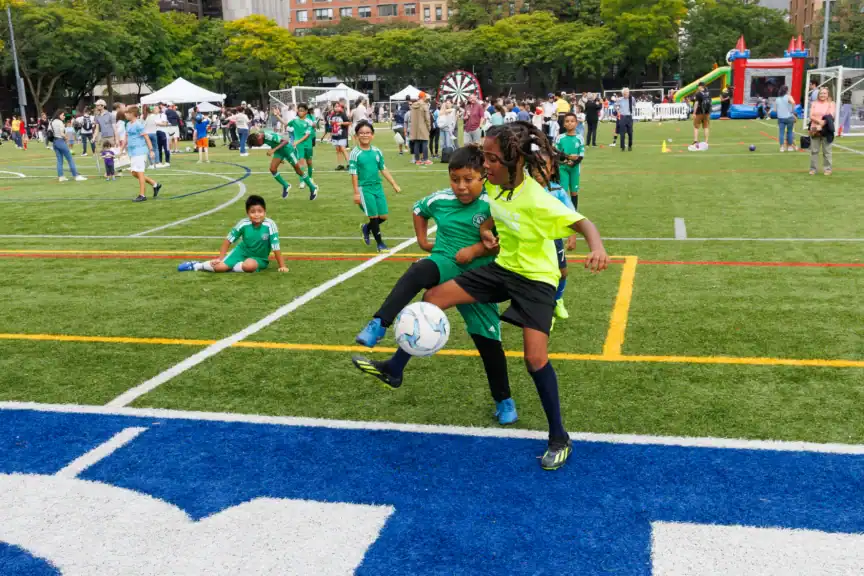
As the World Cup reaches its final weekend, Asphalt Green Soccer Club is hosting Big Kick, a free community soccer festival open to all, taking place July 18 at our facility, coinciding with the third-place match.
Here’s what to expect:
- Wear your jersey — Kids and families are encouraged to rep their favorite national team
- Raffle giveaway — One of our AGSC coaches, a former captain of the Senegal national team, will be raffling off his official Senegal match jerseys to attendees
- Community celebration — A chance for our players, families, and neighbors to come together around the sport we love
Big Kick is free and open to the community, and it’s the perfect way to come together and experience the energy of the World Cup Final with your neighbors!


