Celebrating Black History Month: Public Pools and the Leaders Who Fought for Access to Swimming
For Black History Month, Asphalt Green is shedding light on one of the spaces we know best: swimming pools.
The history of public pools in the United States tells the story of how racial inequality was built into public spaces by design, its ongoing impact on access to swimming, and the courage and resilience of Black leaders who fought for equal access and inclusion.
In the 1930s, the U.S. made an unprecedented investment in public recreation through the Works Progress Administration (WPA). Across the country, 805 new swimming pools and 848 wading pools were constructed, with hundreds more improved. New York City became home to a collection of public pools that were widely regarded as some of the most remarkable public recreational facilities in the country, featuring state-of-the-art design, filtration, and chlorination systems. These pools were intended to be spaces of community belonging, public health, and opportunity, offering a place for New Yorkers to gather, stay active and cool, and explore the sport of swimming.
Despite their promise and popularity, pool access was deeply inequitable. In the South, pools were segregated by law, while in the North, de facto segregation was enforced through exclusionary city planning practices, intimidation, and discriminatory policies. By the 1940s, civil rights activists like T. Gillis Nutter challenged these barriers and fought to integrate pools.
As historian Jeff Wiltse notes, when pools were eventually desegregated in the 1950s and 1960s, many communities responded by abandoning them altogether. In the South, cities drained and closed public pools rather than integrating them. In the North, white residents increasingly fled to private swim clubs outside city centers. This backlash accelerated the decline of public pools, leading to widespread closures in the 1970s and 1980s that have drastically reduced free swimming opportunities, especially in densely populated urban areas.
Decades of underfunding and public pool shortages have contributed to swimming disparities that persist today. The CDC notes that Black children aged 10-14 drown in swimming pools at rates 7.6 times higher than white children, while a study by the USA Swimming Foundation found that 64% of Black children have little to no swimming ability. Today, 68% of New Yorkers lack access to a public pool and 1 in 4 cannot swim.
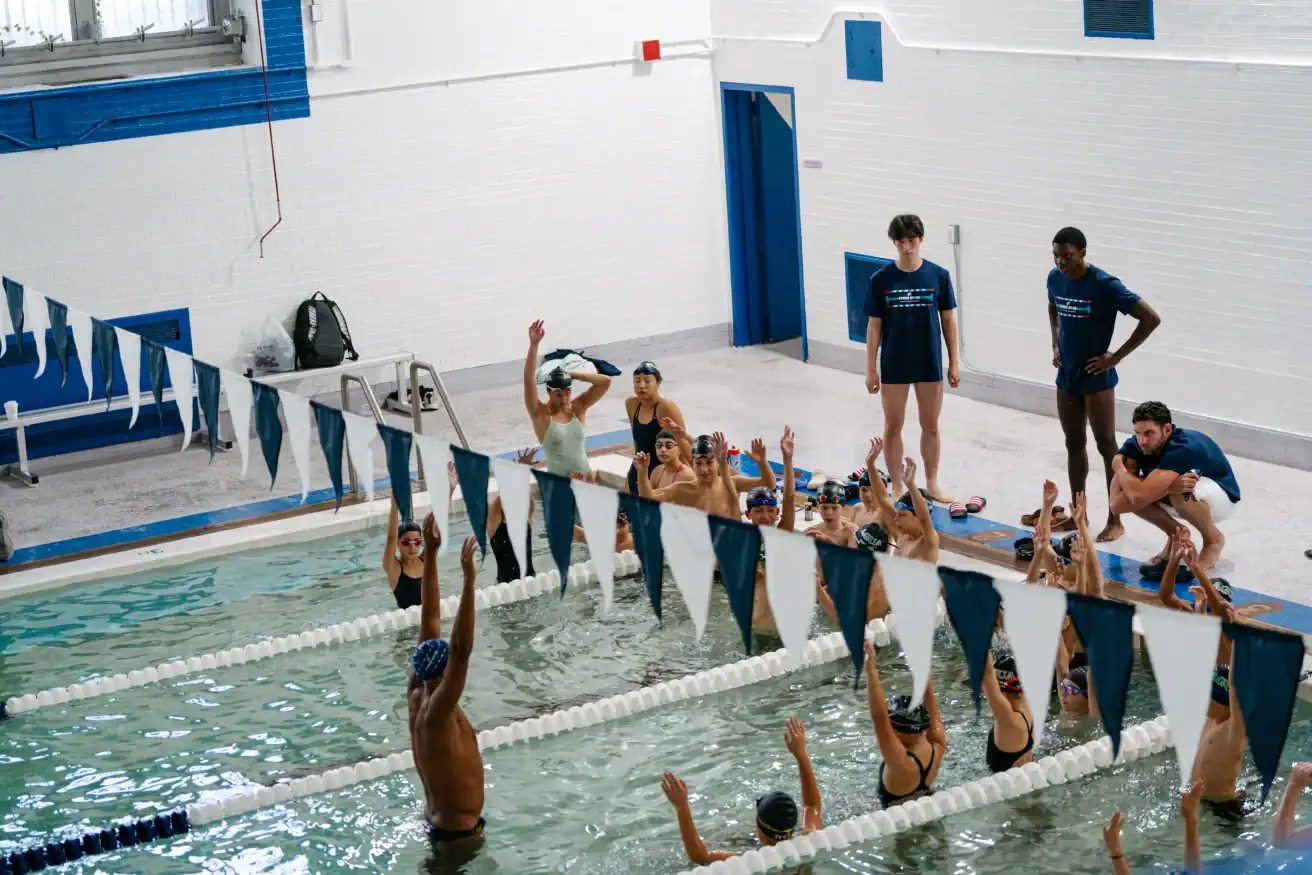
A critical part of Asphalt Green’s mission to bring sports, fitness and play to all is addressing the structural inequities that continue to affect access to swim instruction. Since its launch, Asphalt Green’s Waterproofing program has taught over 100,00 New Yorkers to swim for free, while our Wave Makers Initiative, launched in 2024, is using public pools to pave the way for free swim instruction for children across all five boroughs. In the same year, we helped reopen the pool at River East Elementary School, creating free swim opportunities for the East Harlem community. As our city continues to get warmer, expanding access to pools and swimming will only become more important.
As we reflect this Black History Month, we celebrate those who have paved the way for equal access in sports, fitness, and play, and continue to work to make swimming accessible to everyone. The history of our public pools reminds us that access to swimming must be protected and expanded. By bringing swim instruction to all and reinvesting in our pools, we can undo the lasting impacts of exclusion and divestment and ensure pools are inclusive community spaces that allow everyone the opportunity to find joy, safety, and opportunity in the water.