Why Water Safety Is a Community Issue
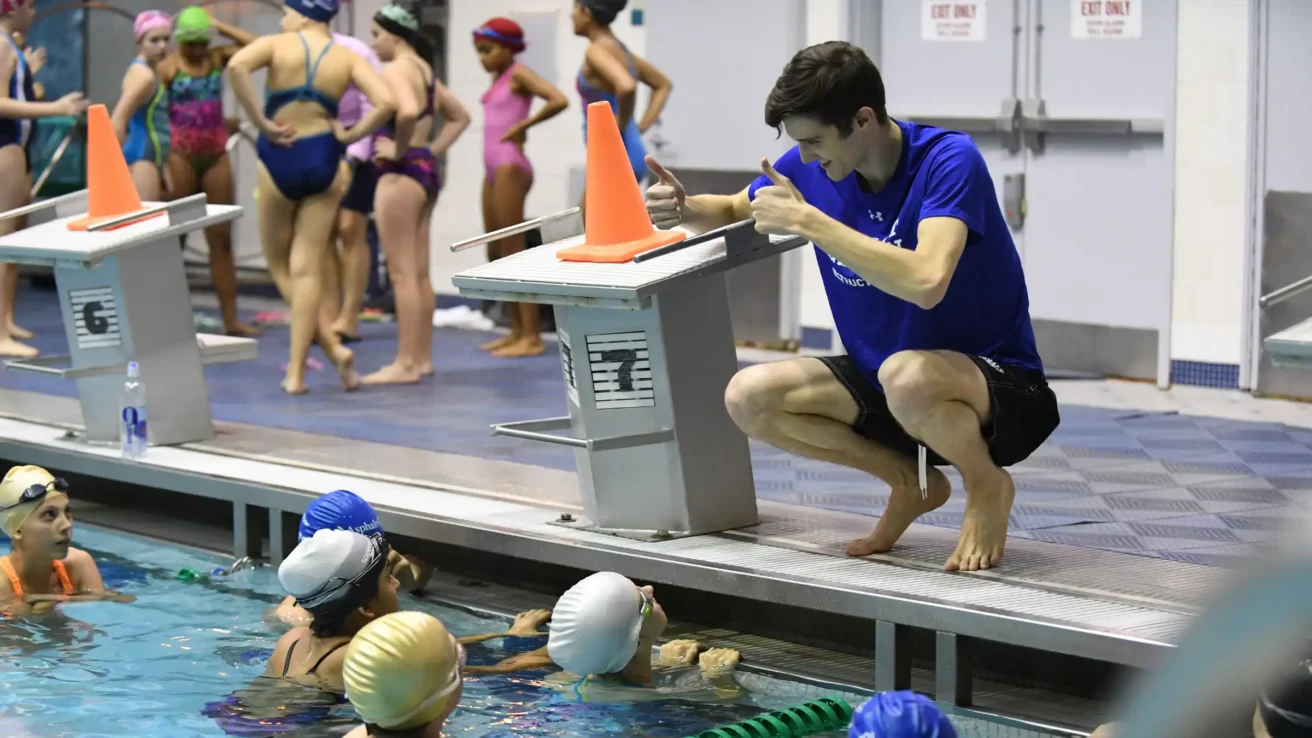
With New York City summer right around the corner, so many of us are looking forward to getting back in the water, at public pools, on the beach, and right here at Asphalt Green.
Anyone who regularly enjoys swimming, whether for fun or competitively, knows how impactful it can be. Swimming is proven to improve our physical and mental health, and open doors to a lifetime of movement and connection.
Yet despite the transformative benefits of learning to swim, drowning remains the second leading cause of unintentional injury-related death for children ages 1–14 in the United States. In New York City, one in four children cannot swim, and more than 3 million New Yorkers live in districts without a single public pool.
The data shows this is not just a safety issue, but one of community and equity. Today, one out of three Black and Asian students, and one out of four Hispanic students, cannot swim. The legacy of segregation, cost, lack of pool infrastructure, and other barriers prevent too many from getting the instruction they need to achieve water safety.
For 40 years, Asphalt Green has helped build a city where people of all ages, backgrounds, and abilities can learn to swim, providing over $40 million in subsidized swim instruction. In 2024, we launched Wave Makers to demonstrate a path to universal free swim instruction for all second graders across New York City. But we know there’s still so much work to do.
To keep all of us safe in the water, and to ensure everyone can pursue a lifetime of safety, health, and joy through swimming, water safety for all cannot wait any longer.
What Are Water Safety Tips Everyone Should Know?
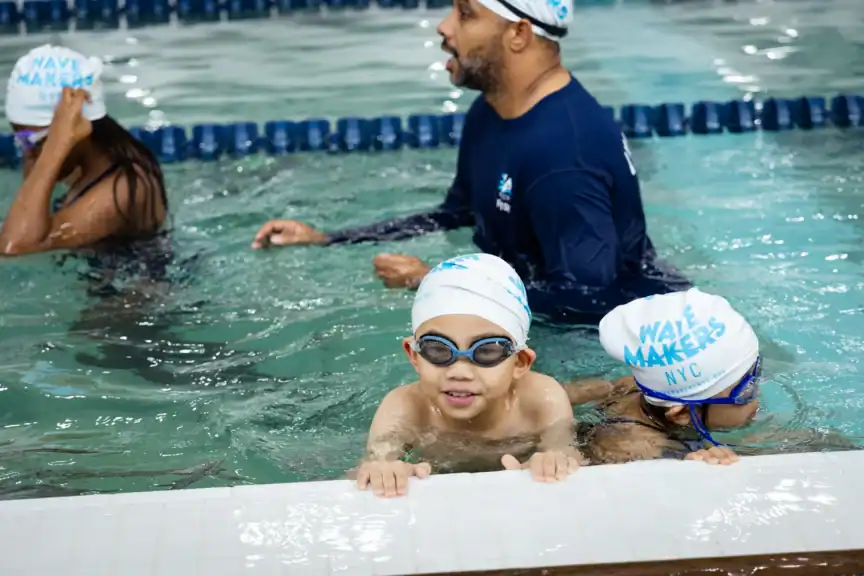
Safe swimming starts long before anyone enters the water. Asphalt Green’s Safe Swim NYC initiative outlines how lifeguard training, pool access, and educational resources all play a critical role in keeping us safe.
Five easy-to-remember tips from Asphalt Green Unified Aquatics (AGUA) Swim Academy every family should know before taking on the water.
1. Swim as a pair near a lifeguard’s chair
Never swim alone. Having a buddy makes swimming more fun and much safer. If there’s a lifeguard nearby, even better. Buddies should always watch out for each other and know how to get help if needed.
2. Don’t just pack it—wear your life jacket!
Floaties and pool noodles might be fun, but they aren’t life-saving devices. Choose a U.S. Coast Guard–approved life jacket that fits snugly and keeps you safe during water activities.
3. Act like a boat—float!
If you find yourself in trouble in the water, try to stay calm. Take deep breaths and float on your back like a boat. Floating gives you time and can help save your life.
4. Learn to swim—it’s a game changer!
Swim lessons can reduce a child’s risk of drowning by 88%! But here’s the catch: If a parent doesn’t know how to swim, their child is far less likely to learn. Let’s change that.
5. Reach or throw, don’t go!
If someone is in trouble in the water, don’t jump in after them. Instead, reach out with a long object or throw something that floats. Helping from a safe distance protects everyone.
Take Asphalt Green’s Water Safety Month Pledge
This year, we also launched our Water Safety Hub to provide key resources and highlight learn-to-swim opportunities. If you’re interested in joining our commitment to water safety for all, you can visit the hub below to take our pledge for your community.