The Car Ride Home: The Most Important Ten Minutes in Youth Sports
Kevin Burton Chief Program Officer
August 13, 2026
I was about to enter my sophomore year of high school the summer I was first invited to play with my school’s varsity summer league team at IS8 in South Jamaica, Queens.
That day was big for me. I had played basketball my whole life, and that game in Queens was one of my first opportunities to compete against players of the highest level. I’m talking future McDonald’s All-Americans–some of which would even go on to reach the NBA.
I was just 15 years old during that game, and the speed, size, and skill of my competition completely overwhelmed me. It didn’t go as I had hoped, and I can still remember the feeling I had as I walked back to the car with my dad after the game: devastated, and doubtful that I really had what it takes to achieve my dreams.
When we started driving home, my dad didn’t say anything right away. He just let me sit with disappointment, then played my favorite radio station. After giving me time to decompress, he simply said “Hey, that was a great take in the second quarter. Keep being aggressive.”
The play he was referring to ended in me driving to lane and having my shot blocked into the third row. I started to protest, as any teenager would, but he just repeated… “keep being aggressive.”
I didn’t know it then, but in hindsight, that ride home was one of the most critical moments of my athletic journey. In my most vulnerable moment after one of the biggest disappointments of my young career, my dad chose not to critique or analyze my performance, but to encourage me when I was doubting myself the most.
What Should You Say to Your Athlete After a Tough Game?
After spending more than a decade of my career in youth sports leadership, I’ve learned that my story is not unique. Every day across the country, parents struggle to find the tools to have positive and productive conversations with athletes after their performance. That’s where Asphalt Green’s expert coaches can help.
Sports psychology shows that the best approach is not those filled with coaching or critique, but instead are ones when parents listen, offer support, and give young athletes space to process their experience. This aligns with many of the most cited reasons over 70% of kids quit sports by age 13: burnout, pressure, and a loss of the fundamental joy that makes kids fall in love with sports in the first place. At Asphalt Green Sports, we put this into practice through our approach to player development:
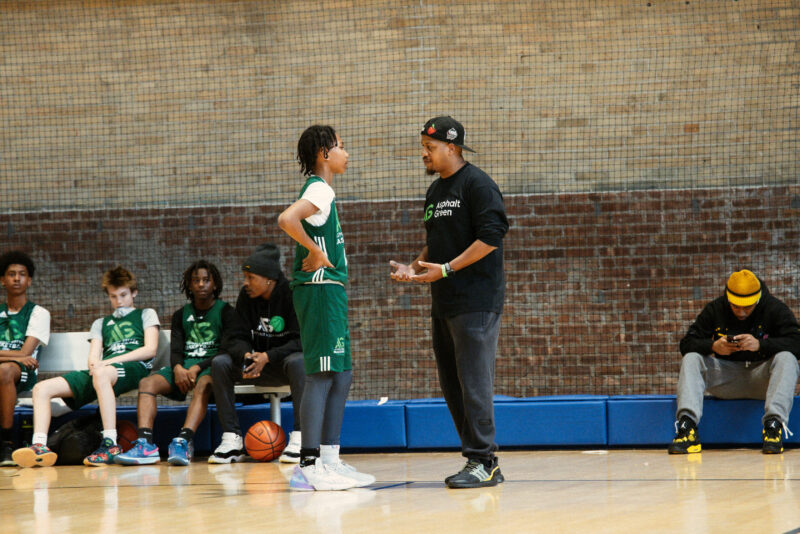
Giving our athletes the space to process disappointments and express themselves is fundamental to sustaining the motivation, passion, and curiosity to learn that all great athletes develop. After every game, we encourage our athletes to share their own reflections and feedback on performance before making suggestions for improvements.
-Shirod Ince, Asphalt Green Basketball’s Director of Player Development
Three Tips I Suggest For Talking to Your Athlete after a game
1. Give your athlete time to decompress.
Immediately after a game, practice, or meet, young athletes are often still processing their emotions. Jumping straight into performance analysis can feel overwhelming. Instead, allow some time and let your athlete decide when or if they want to talk about their performance.
2. Listen before sharing
Studies have found that athletes respond more positively when they feel their parents fully understand their experience. The first step to creating this environment is by asking your athlete questions before providing your own analysis. Simple prompts like “How did you feel about the game?” or “Did you have fun today?” can encourage reflection without creating pressure.
3. Focus on effort, enjoyment, and growth.
Rather than dwelling on mistakes, wins, or losses, emphasize what your athlete learned or what they enjoyed. Remember that the #1 reason kids play sports is to have fun. By sharing your love for watching them play or focusing on the positives you’ve witnessed, you can keep the focus on their passion for the game and foster greater acceptance about the ups and downs that naturally come as part of an athlete’s development.
My car ride with my dad taught me that sometimes, the most powerful thing we can give a young athlete after a difficult performance isn’t analysis or advice. It’s space, perspective, and a reminder to keep being aggressive. Today, I understand from first-hand experience as an athlete and youth sports leader that the car ride home can define whether a young athlete chooses to give up on their journey or continue finding joy, health, and friendship through sport.
Right now, Asphalt Green’s center for excellence is building and sharing resources to improve the athletic experience for everyone. If you found these tips helpful for supporting your athlete, connect with us at [email protected] or visit AG Impact below to learn more.
If you have a young athlete who’s building their passion for sports, Asphalt Green’s fall season is right around the corner.
Across our recreational classes, leagues, lessons, and competitive teams, we pursue athletic development by prioritizing fun. When young athletes are given the space and opportunity to develop their passion for play, they create a foundation of dedication and commitment that can lead to success, on and off the field.
Explore our full range of programs below to start your athletic journey with Asphalt Green.